



Collaboration key to aquaponics partnership
What began as a field-identified need has grown into a meaningful global learning partnership. The Aquaponics Collaboratory Project started when the Director of Nazarene Compassionate Ministries in Mozambique reached out with a vision: an economic-empowerment initiative built around aquaponics. Could MVNU help make it happen?
December 5, 2025
- Fairbanks Center for Global Engagement
- News
- The Flame
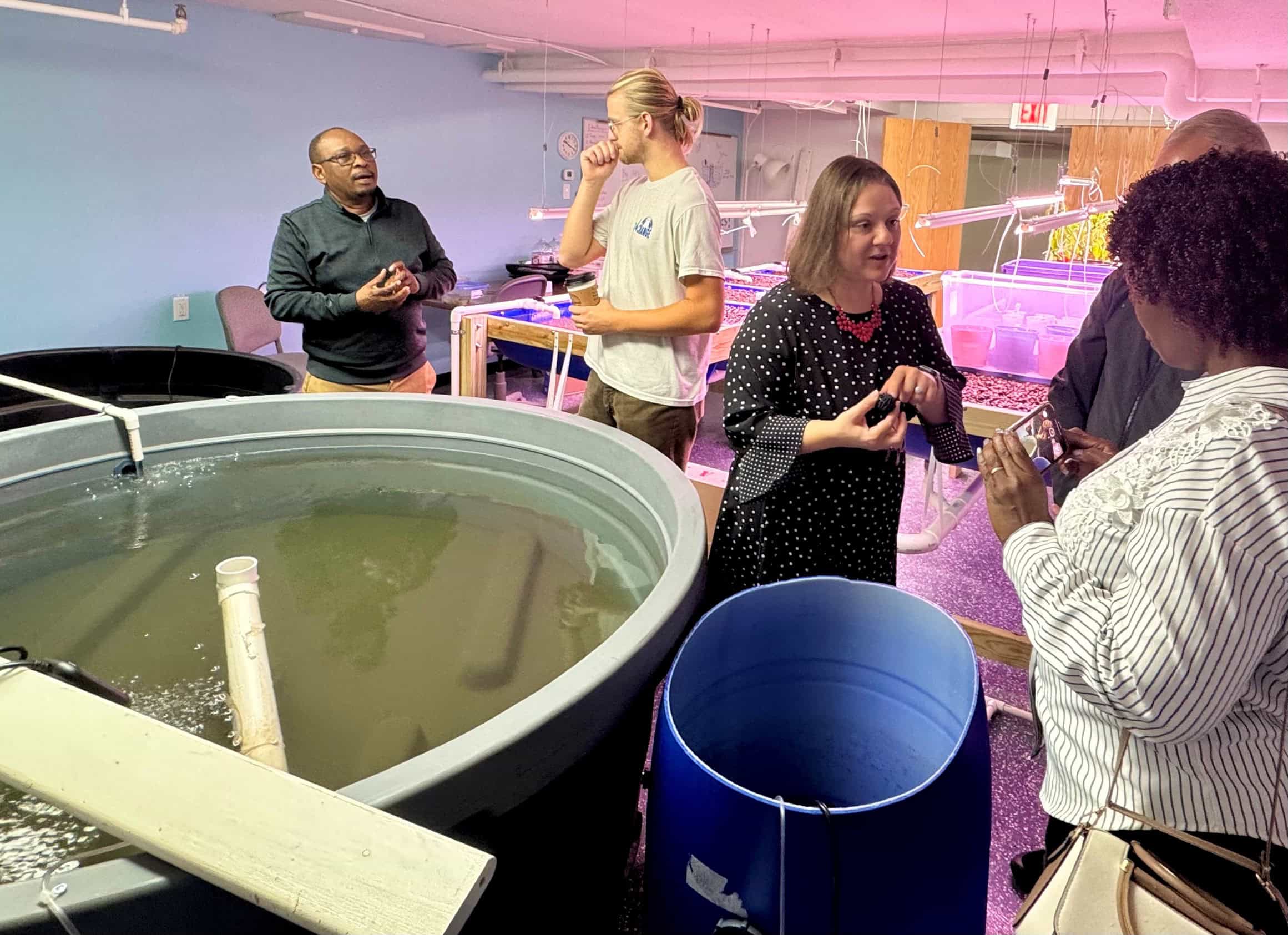
What began as a field-identified need has grown into a meaningful global learning partnership. The Aquaponics Collaboratory Project started when the Director of Nazarene Compassionate Ministries in Mozambique reached out with a vision: an economic-empowerment initiative built around aquaponics. Could MVNU help make it happen?
The Fairbanks Center for Global Engagement embraced the challenge through the Vazquez Family Collaboratory, recruiting students Bryce Bosworth ‘26 and Zach Ballenger ‘25 to lead initial research and system design. Their goal: create a sustainable aquaponics model that can be replicated in Mozambique — advancing food security and economic empowerment while serving as an educational resource.
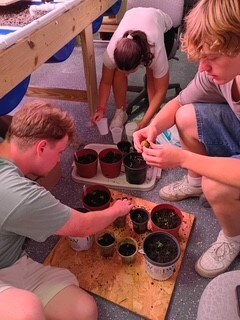
Aquaponics integrates aquaculture and hydroponics in a closed-loop system where fish waste fertilizes plants, and plants clean the water before it cycles back to the fish tank. It’s efficient, sustainable, and ideal for regions where water and soil are limited — requiring up to 90% less water than traditional farming.
After a semester of design work, Bosworth and Ballenger expanded their learning beyond the classroom. In May 2023, they traveled to Guatemala to study aquaculture systems firsthand — connecting the project’s origin in Mozambique to a broader network of global partners.
“In Guatemala, we learned directly from people who had spent years maintaining systems,” said Ballenger. “The opportunity to learn from each other’s diverse perspectives is impossible to do with a textbook.”
Working alongside students from Point Loma Nazarene University and Olivet Nazarene University at the AgInno Institute, they explored barrel systems and in-ground ponds, ultimately concluding that barrel-based systems offered simpler maintenance and easier replication.
“This work is not just technical — it’s relational and transformational,” said Ballenger. “Global collaborations are mutually transformative. We learn as much from our international partners as they do from us.”
The Aquaponics Collaboratory Project has engaged students and faculty from engineering, environmental science, nursing, biology, communication, Christian ministries, and intercultural studies — an interdisciplinary team designing practical, community-centered solutions. This fall, a team of seven students shared their progress with the Vazquez family and Cosmas Mutowa, Field Strategy Coordinator for Africa Southeast.
“This project has been a team effort bringing together diverse skills and perspectives,” said Professor Jessica Armstrong. “Every single student involved has brought an amazing work ethic, great enthusiasm, and an impressive amount of problem-solving ability to the project.”
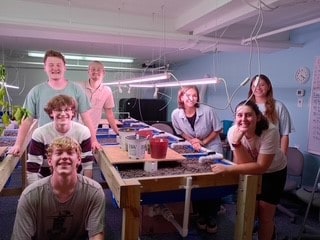
With system construction completed, the MVNU group hopes to eventually build a second system for comparative research. The group also plans to experiment with different plant species, filtration methods, and system designs, all while producing training materials that will help Nazarene Compassionate Ministries replicate the model in Mozambique.
“Our long-term goal is to establish an aquaponics system at the Leadership Training Center in Milange, Mozambique, so pastors-in-training can gain experience and teach their communities how to build systems to augment local food supply,” said Dr. Jon Bossley.
The project has embraced the wisdom of a Kirundi saying: “Bukebuke akanyoni kubaka urusenga” — “Slowly the bird builds its nest.”
Step by step, MVNU students and faculty are building something lasting — one tank, one plant bed, and one global partnership at a time — guided by innovation, collaboration, and a commitment to global service.
“Working on the aquaponics project over the last two and a half years has been an extremely rewarding experience for me,” said Bosworth. “I have watched the project develop from dreaming about what we could do to now having a functional aquaponics lab and plans to fly to Mozambique next year. For me, the Collaboratory project is a culmination of all my passions: environmental biology, holistic Christian ministry and international development and relations.”
About the author
MVNU Communications
Communications Team
Related Posts
CALLED TO SHEPHERD:
Katie Starr’s Summer of Faith and Growth

36 Years of Art, Faith , and Community
By John Donnelly, MFA
FAITH, FAMILY, AND THE FUTURE: The Vazquez Legacy at MVNU
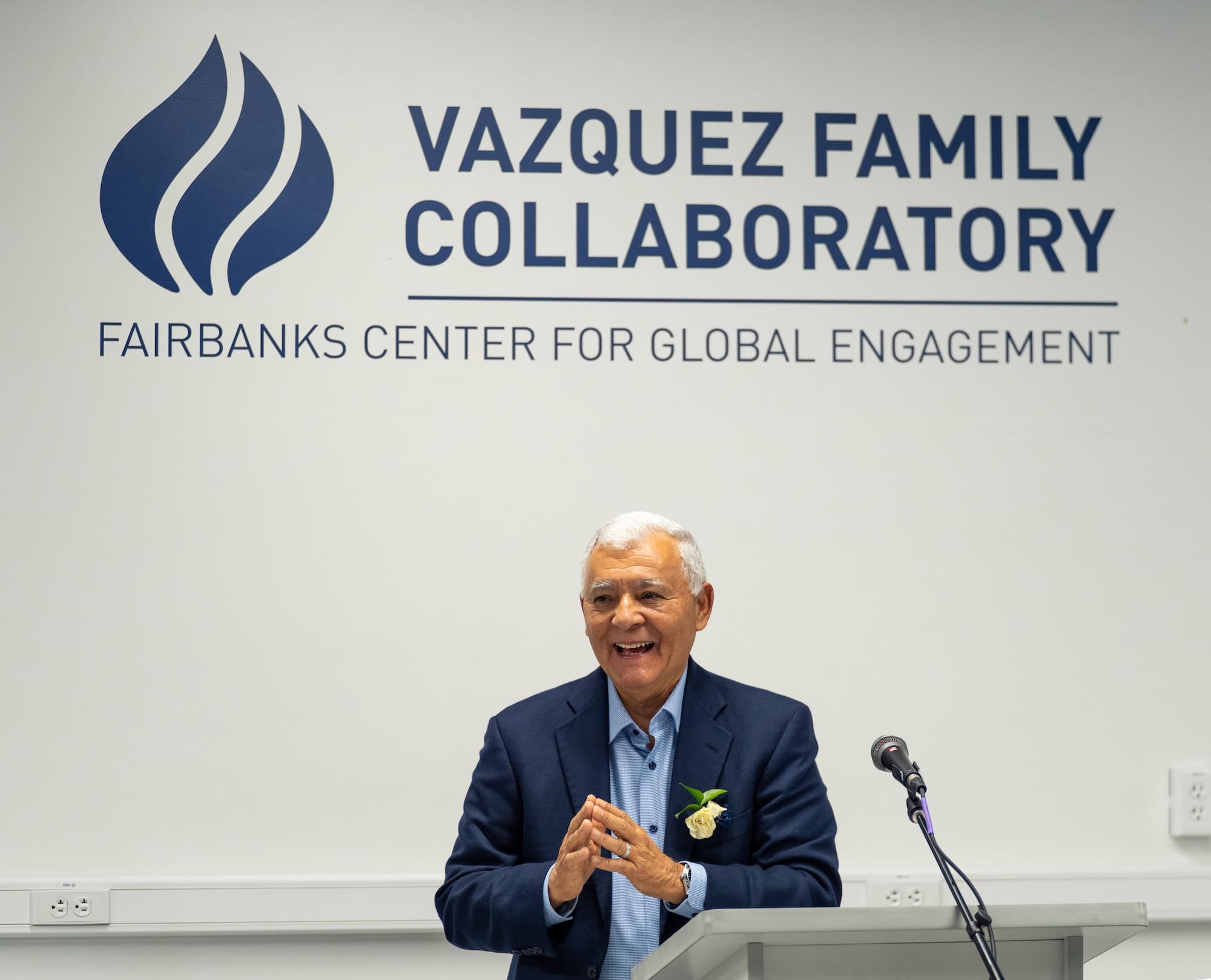
Juan and Inez Vazquez’s unwavering commitment to faith and service — instilled by Rev. Angel Vazquez and lived out through generations — led them to establish the Vazquez Family Collaboratory. Now, this transformative collaboratory enables students to move beyond text books, shaping MVNU students into servant-leaders who discover how education, service, and faith can transform lives across the globe.