



SPUR research on hellgrammites offers clues to stream health
The study, “Small-Scale Habitat Relationships of Corydalus cornutus Hellgrammites in Central Ohio Riffles,” by Dr. Jon P. Bossley, Division of Health and Life Science, and student Hanna E. Humphrey, along with Dr. Peter C. Smiley Jr. of the USDA Agricultural Research Service, was published on April 10, 2026, in Insects.
July 23, 2026
- News
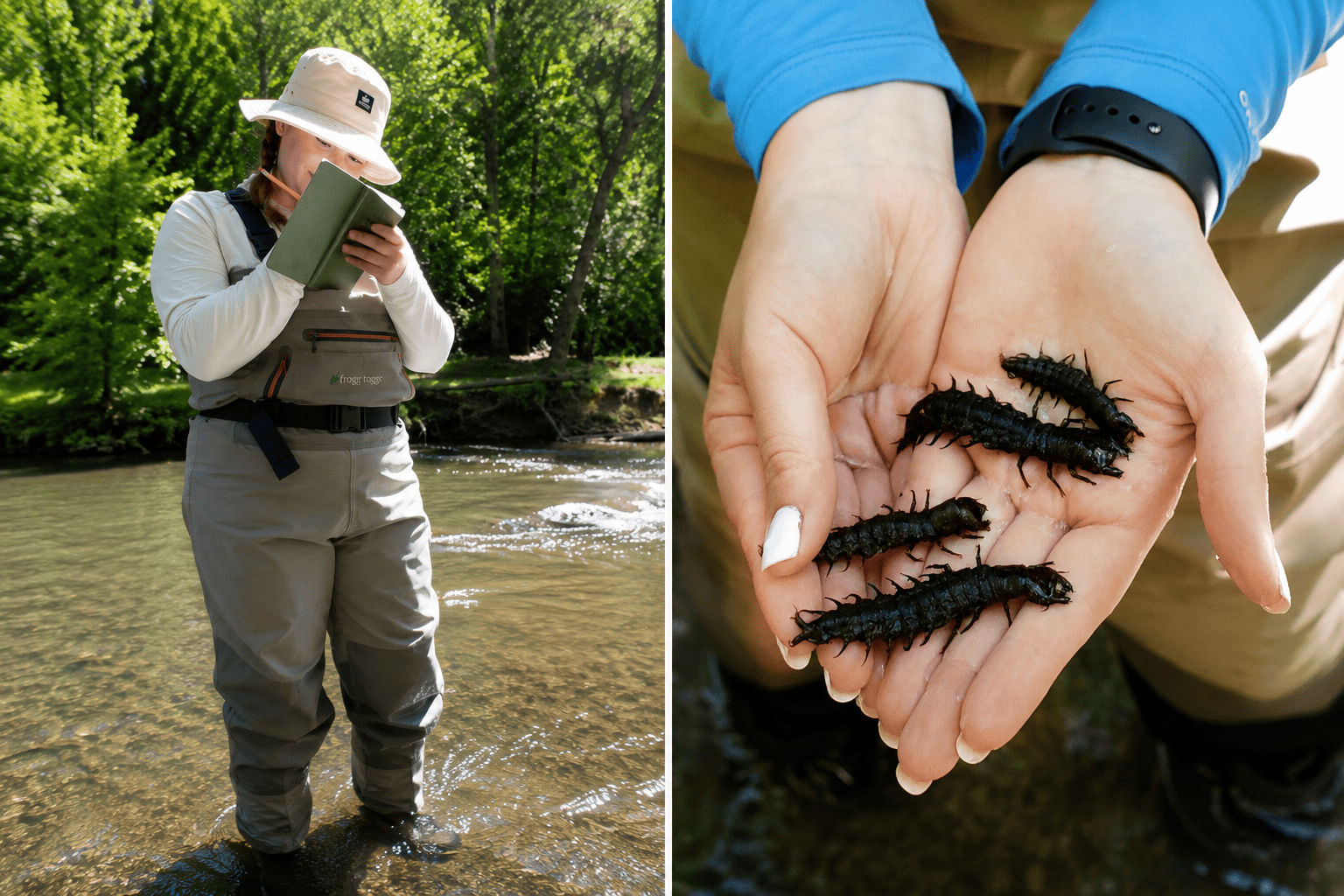
MOUNT VERNON, Ohio — Mount Vernon Nazarene University faculty and an undergraduate researcher have published a second peer-reviewed journal article produced through the university’s Summer Program for Undergraduate Research (SPUR).
The study, “Small-Scale Habitat Relationships of Corydalus cornutus Hellgrammites in Central Ohio Riffles,” by Dr. Jon P. Bossley, Division of Health and Life Science, and student Hanna E. Humphrey, along with Dr. Peter C. Smiley Jr. of the USDA Agricultural Research Service, was published on April 10, 2026, in Insects.
The research investigated the environmental factors that influence the occurrence, density, and body size of hellgrammites — the aquatic larvae of the eastern dobsonfly — within riffles in central Ohio rivers. The team found that hellgrammite occurrence and density increased with water velocity, substrate size, and substrate richness. Density also increased in plots located in the center of the riffle, and body size increased with greater distance to the nearest plot containing hellgrammites.
The findings suggest that stream habitat management efforts that increase water velocity and substrate sizes within degraded riffles will benefit hellgrammites along agricultural rivers in the Midwestern United States. The study also indicates that hellgrammites can serve as an effective indicator species for physical habitat conditions in streams.
“Hellgrammites may seem like obscure, unimportant bugs in the water, but they serve many important roles in the aquatic food web,” said Dr. Jon Bossley, principal investigator of the project. “They are prey for a variety of fish and crayfish species and they, in turn, function as predators of other aquatic insects. Also, because of their sensitivity to pollutants, hellgrammites indicate water quality, just like a canary in a coal mine.”
From 2022 to 2025 a total of six MVNU undergraduate students worked on this four-year hellgrammite study. These MVNU researchers were also joined by four undergraduate researchers from Ohio State University and North Carolina A&T University through a researcher exchange program that was started by Dr. Bossley. The exchange program provides opportunities for students from MVNU and partner institutions to conduct short-term work on projects at the partner institutions, which allows students to expand their network and gain additional research experience.
“The second publication from a different SPUR research group at MVNU signifies the strength of the program and the quality of the research work MVNU undergraduate students are capable of doing,” said Dr. Binyang Hou, professor of physics and SPUR director.
Humphrey’s publication was the first in a series of papers the hellgrammite team aims to publish from the project’s four-year data set.
“We are proud of the efforts of Ms. Humphrey and grateful for the dedication of Dr. Bossley,” said Dr. Deb Garee, chair of the Division of Health and Life Science. “Partnering student research with faculty expertise to impact the health of the environment provides an example of how MVNU is committed to scholarship and service.”
SPUR provides undergraduate students with eight weeks of faculty-mentored paid research designed to strengthen academic learning, scholarly productivity, and professional development.
More information about the program is available at mvnu.edu/SPUR. Visit doi.org/10.3390/insects17040410 to read the article in its entirety.
About the author
MVNU Communications
Communications Team
Related Posts

Daugherty, Smith and Hebrank to be inducted into Cougar Wall of Fame
The induction will take place at the halftime of the men’s basketball game on Homecoming night, Nov. 13, against St. Mary-of-the-Woods College (7:30 p.m. tip-off).

MVNU to host Honors Choir Festival featuring students from 31 schools
The 2026 District 10 Ohio Music Education Association Honors Choir Festival will be held Saturday, Oct. 24, at 3:30 p.m. in the R.R. Hodges Chapel/Auditorium. The concert is free and open to the public.

WNZR at 40: Four Decades of Being a Lifeline
Forty years after the first signal went on the air, WNZR remains what generations of students, listeners and supporters have known it to be: a classroom, a community partner, a ministry, and a voice of encouragement.